

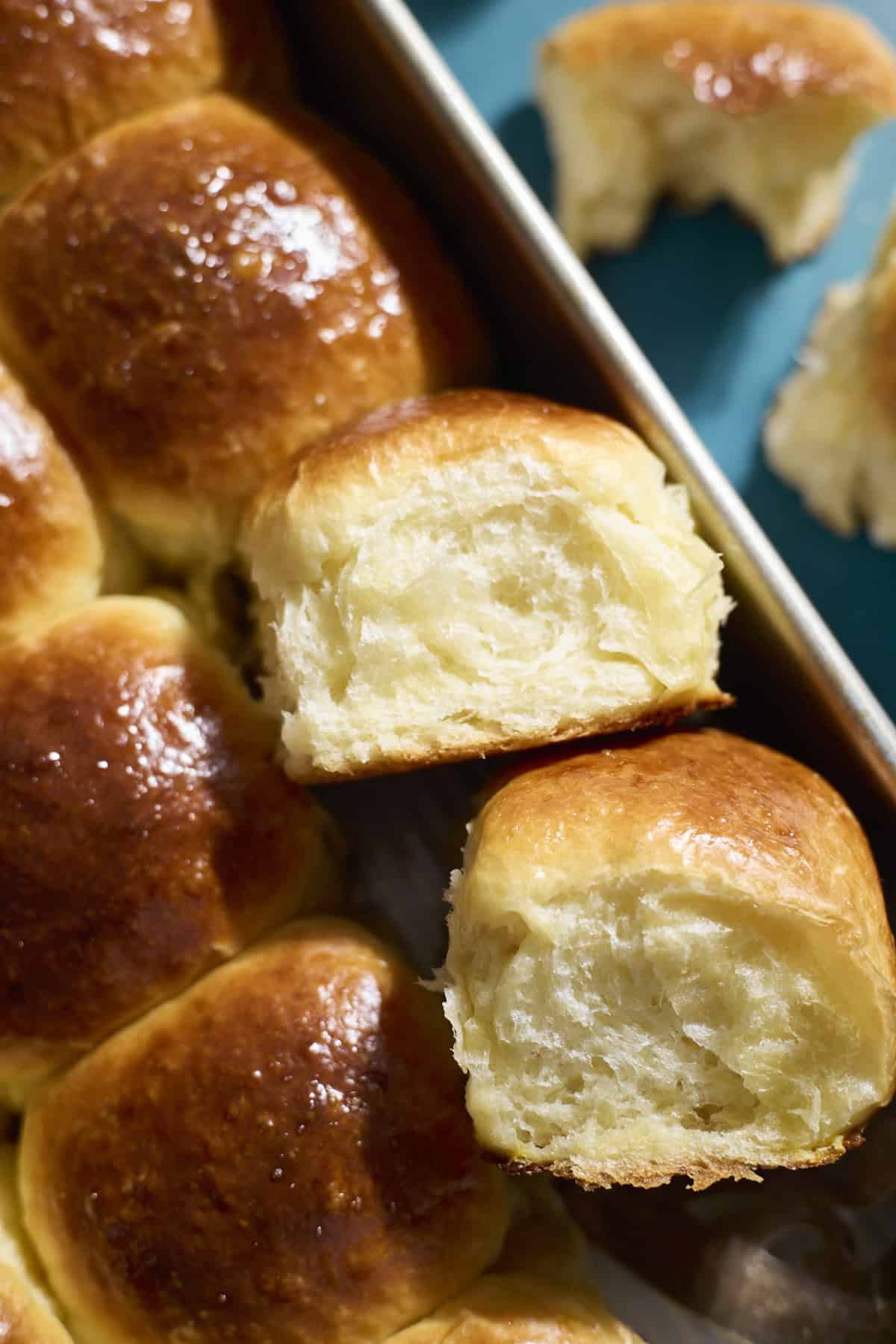
These Sourdough Discard Brioche Rolls are a delicious, rich and buttery roll that is a perfect side dish for any meal. They come out of the oven smelling so buttery and lucious with a beautiful shine! This recipe can be made overnight or same-day, but there is some special equipment needed (a stand mixer), and I do not recommend this recipe for a novice baker as it requires some more intermediate techniques.
Why you'll love this recipe
- These brioche rolls smell delicious and are so buttery, soft ,and fluffy. They're a perfect side for any meal!
- Brioche rolls can be made same-day or overnight, so you can adjust with your schedule.
- These rolls freeze well so make a batch to enjoy now, then freeze the rest for later!
- This recipe is made with sourdough discard, but you can easily modify to use active sourdough starter (and no added yeast) if you prefer.
- Looking for other dinner roll recipes? Try these Sourdough Discard Potato Dinner Rolls and these Sourdough Discard Hawaiian Rolls.
Jump to:
Ingredients
There are only a few ingredients you'll need to bring this recipe together.
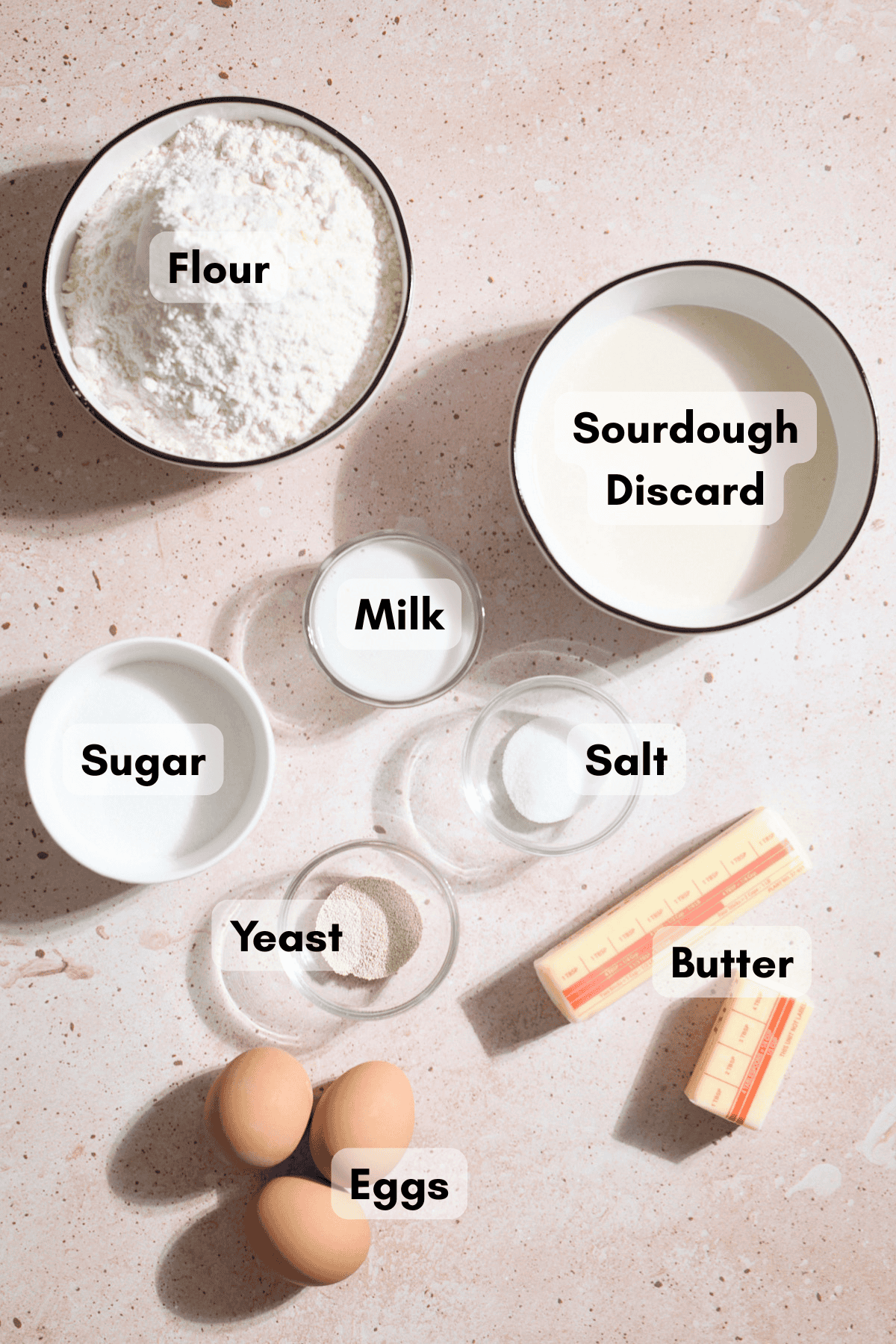
- Sourdough discard: The sourdough discard should be unfed and at room temperature for this recipe. This recipe is designed for a sourdough starter with a 1:1 ratio (when you feed your starter, it's with 1 part flour and 1 part water). If your starter uses a different ratio, you may need to adjust some of the ingredients in this recipe.
- Learn more about how to make a sourdough starter.
- Butter: It's important that the butter is softened to room temperature so that it will incorporate into the dough correctly. I like to leave my butter on the countertop overnight if I know I'm going to be making brioche in the morning!
- Eggs: It's also important that the eggs are room temperature for this recipe.
See full recipe below for detailed directions.
Substitutions & Variations
This is an adaptable recipe, and below are a few easy substitutions and variations you can try.
- Use active sourdough starter - If you'd like to make this recipe with active sourdough starter, you can! To do so, omit the yeast and replace the sourdough discard with active starter (200g). You may also need to increase the rise times (I suggest the overnight rise option for this recipe).
- Try add-ins - Mixing in something like raisins or chocolate chips would be delicious! Add these kinds of inclusions after your dough has passed the windowpane test and before you set it in the bowl for the first rise.
How to Make Sourdough Discard Brioche Rolls
This is a recipe that requires patience - none of the mixing or kneading will happen quickly! The full recipe with detailed directions is at the bottom of this post.

- Step 1: Mix together all the ingredients except for the butter in a stand mixer fitted with a dough hook attachment. Knead on medium-high speed until the dough comes together. It's ok if it looks a little dry or rough here.
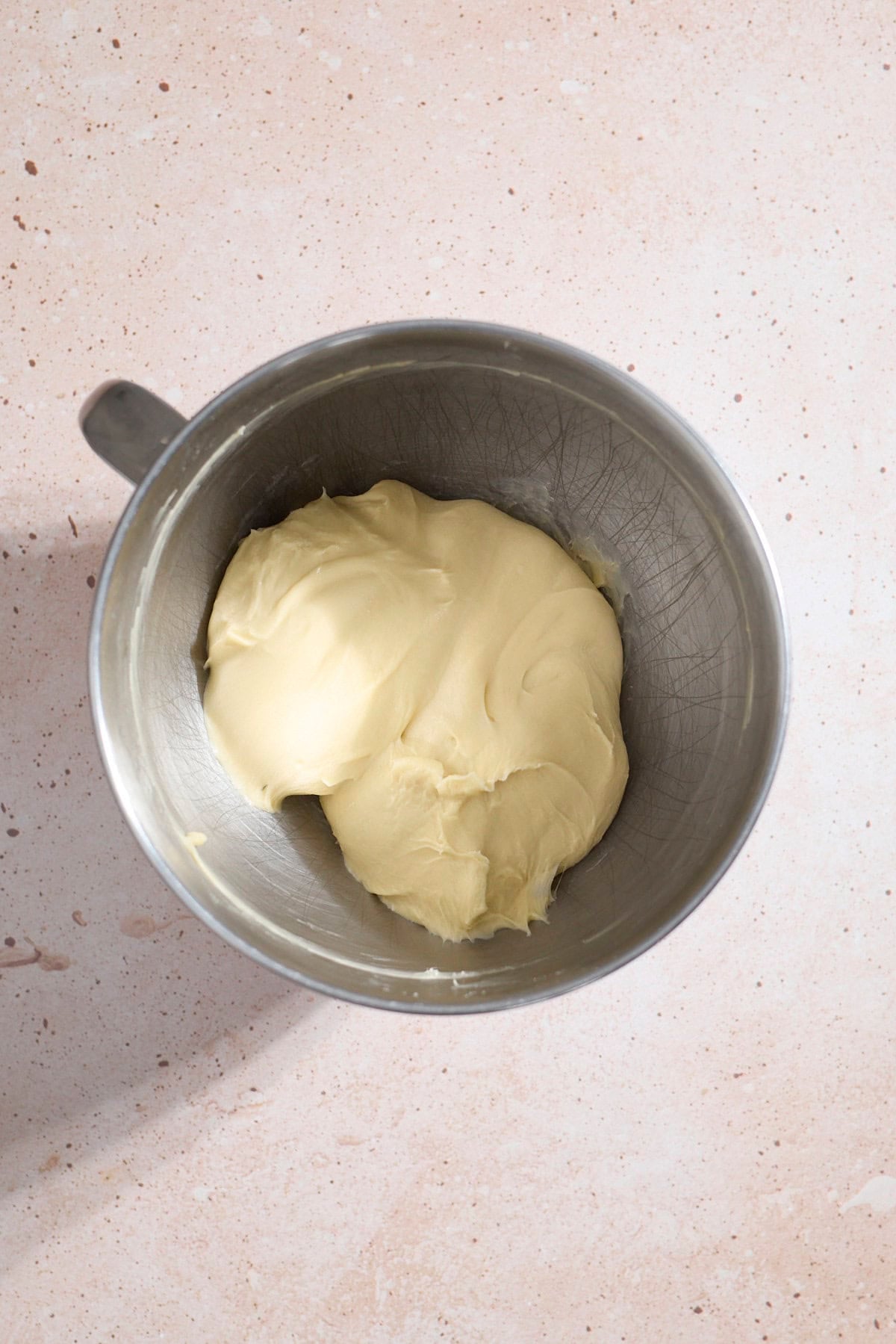
- Step 2: Add the softened butter 1 Tablespoon at a time, letting it incorporate into the dough fully before adding more. This step will take 12-15 minutes to complete.
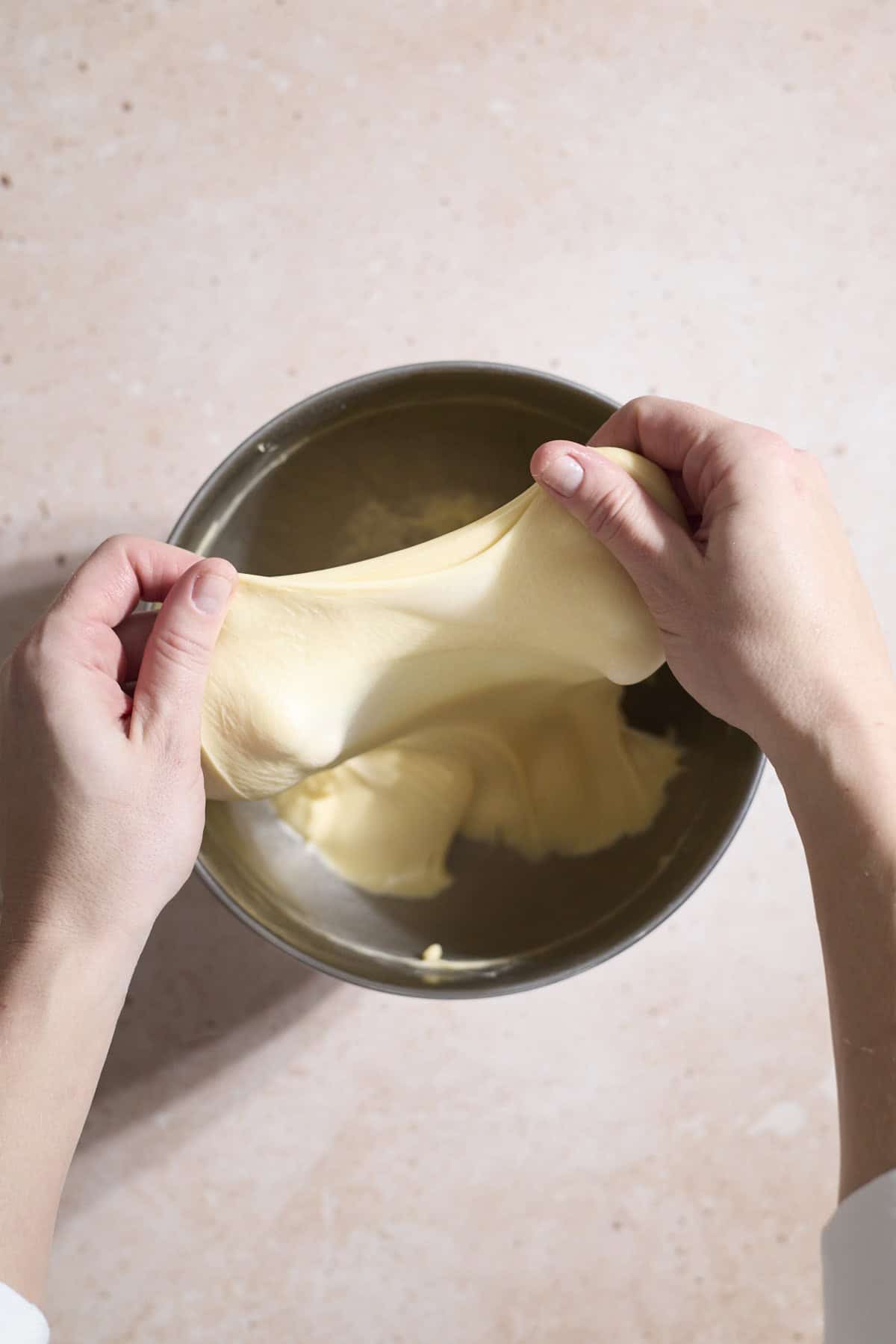
- Step 3: Knead the dough for an additional 5-7 minutes. The dough should pass the windowpane test to show that the gluten has developed appropriately.
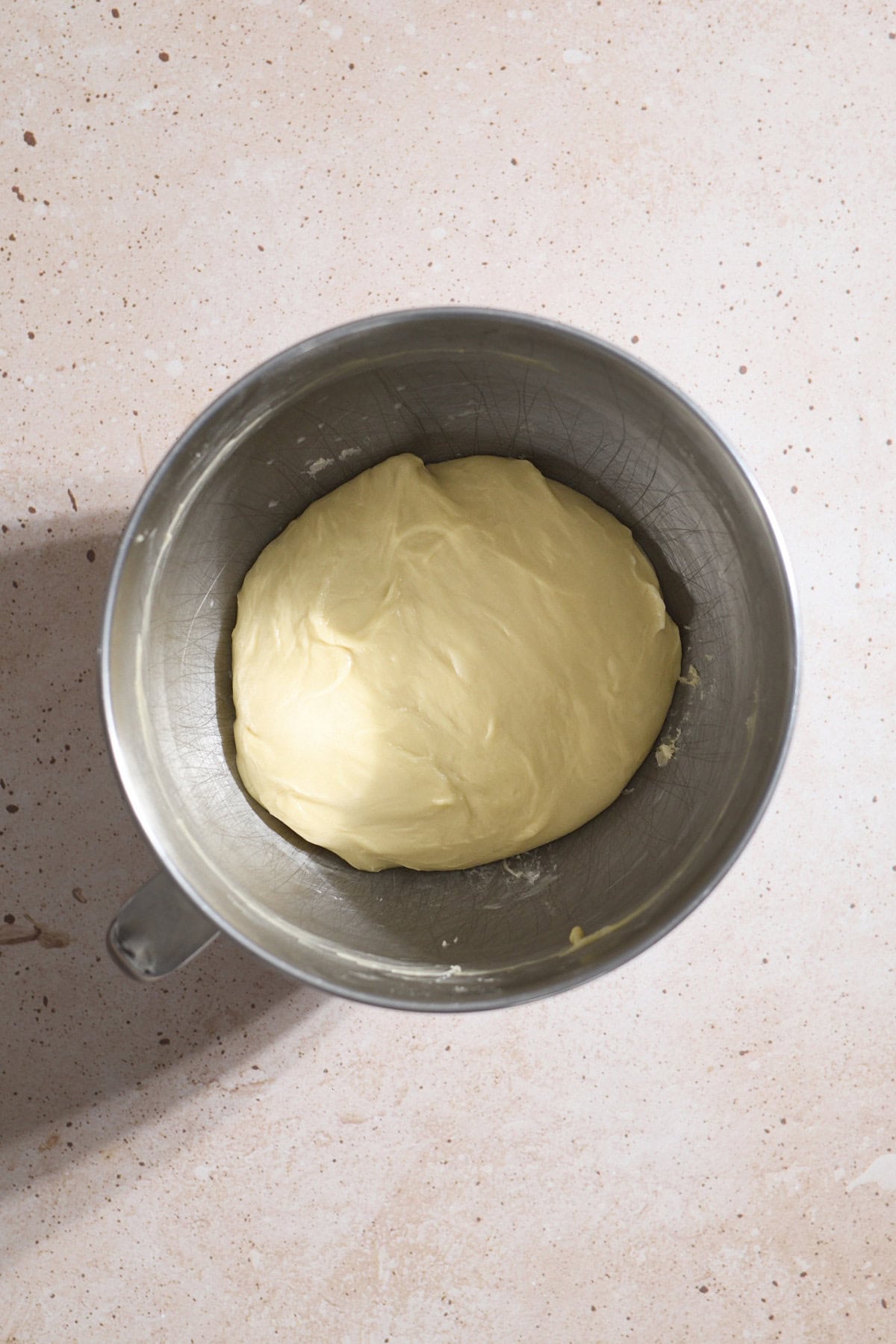
- Step 4: Gather your dough and return it to the bowl. Cover and let rise for 2-4 hours, until doubled in size.
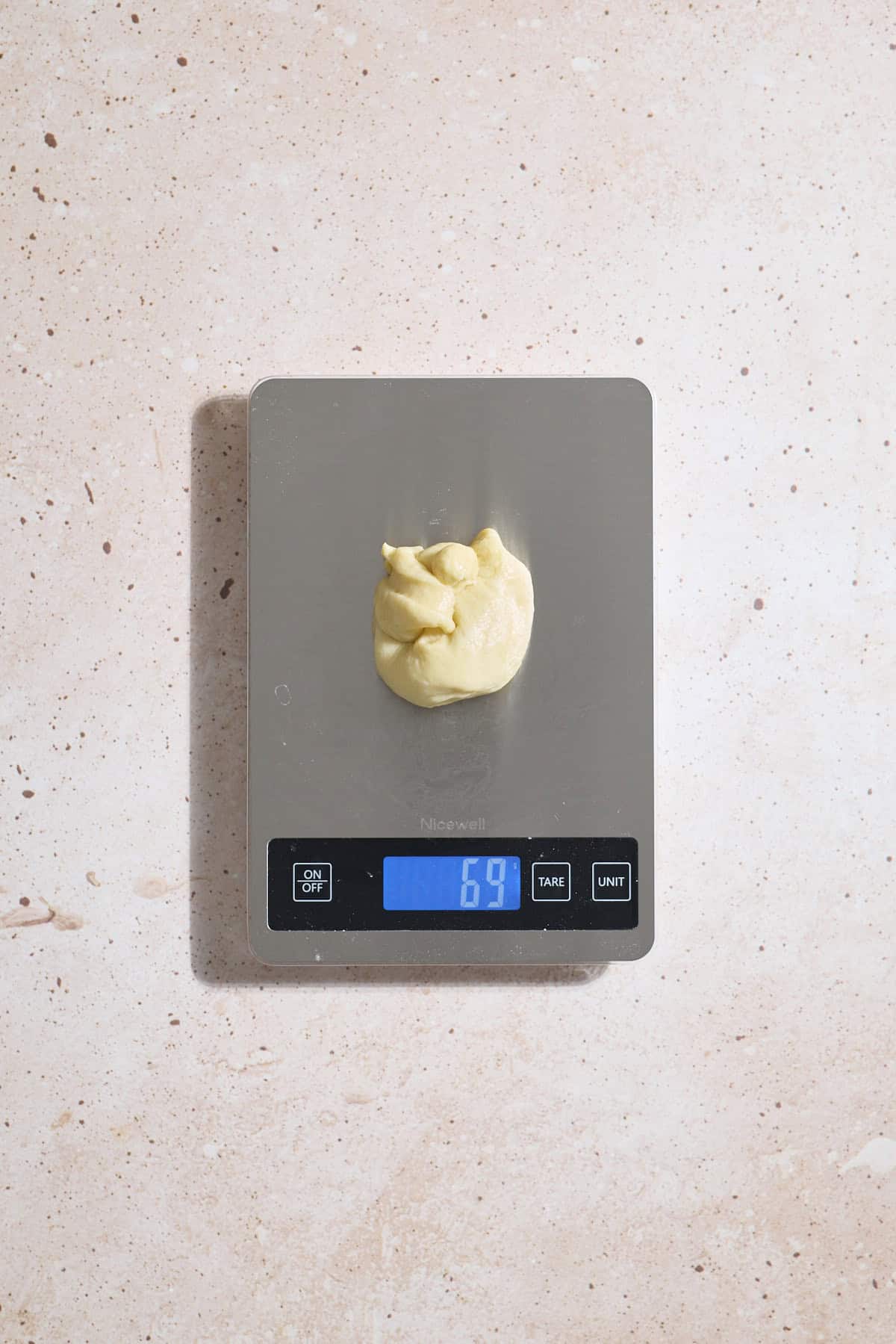
- Step 5: Divide the dough into 15 equal-sized pieces using a kitchen scale.
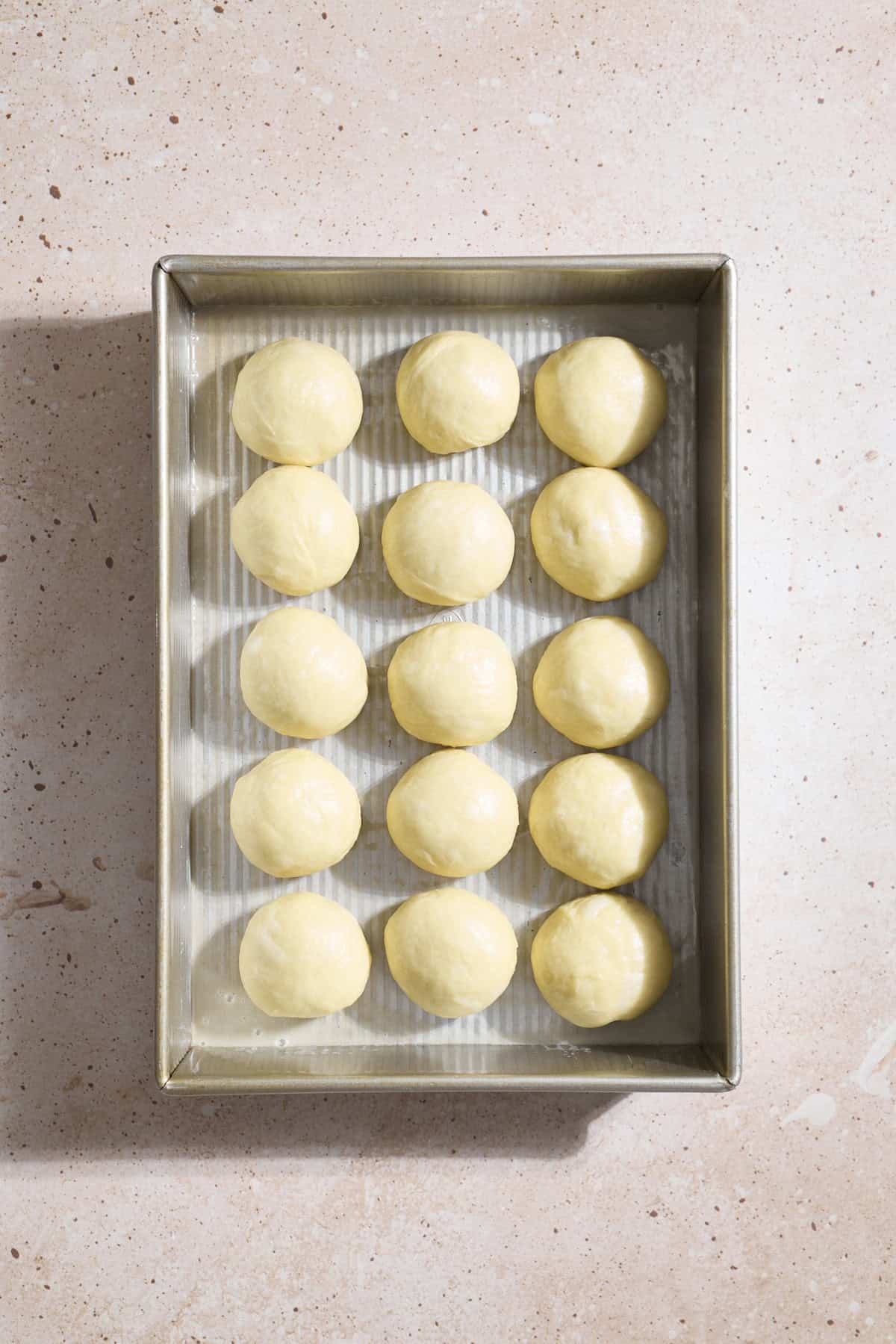
- Step 6: Shape the dough into a ball in the palm of your hand, using one hand for friction. Place each dough ball into a buttered 9x13-inch baking pan, seam-side down.
- Step 7: Cover and let rise for 60-90 minutes until puffed.
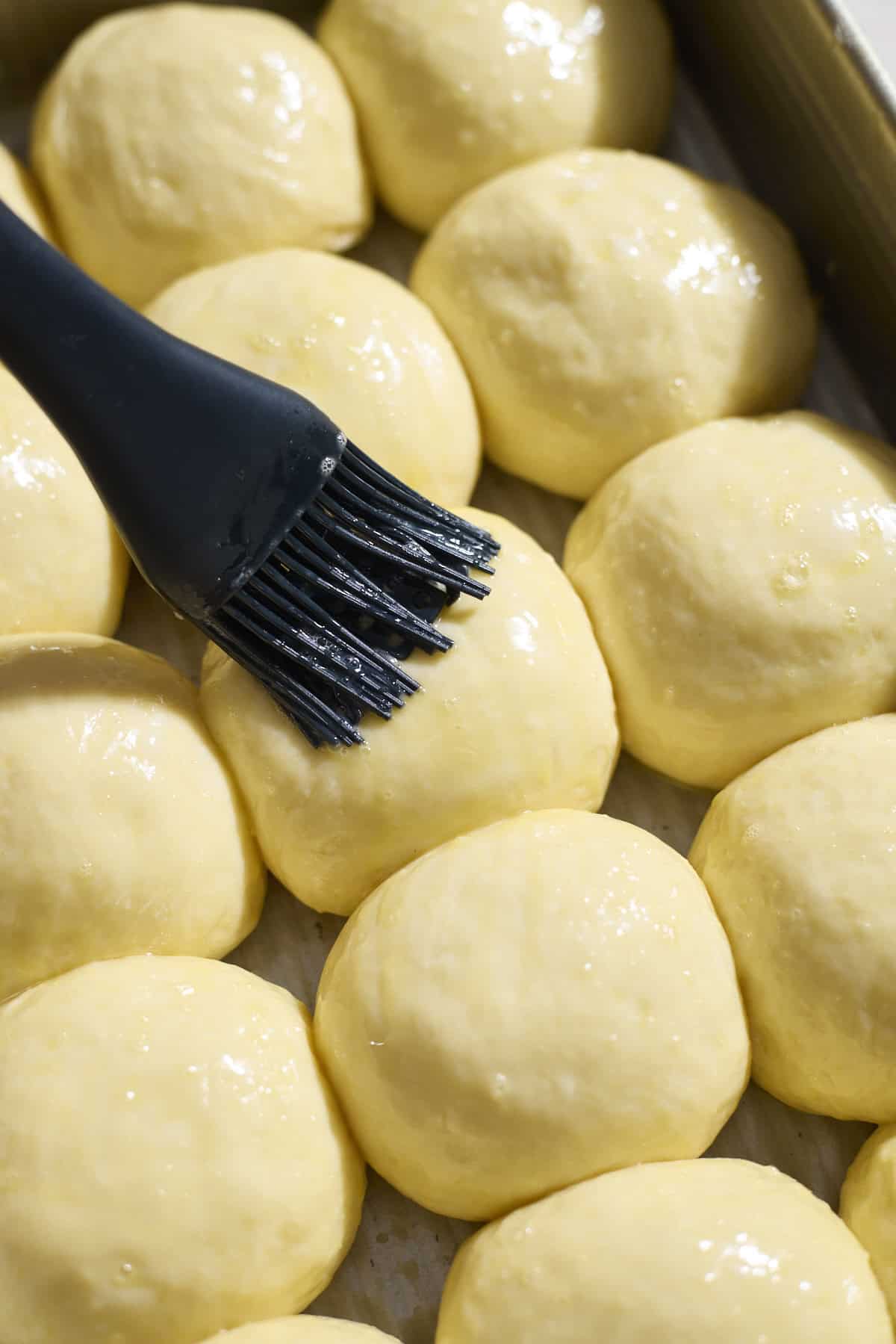
- Step 8: Brush the rolls with egg wash.
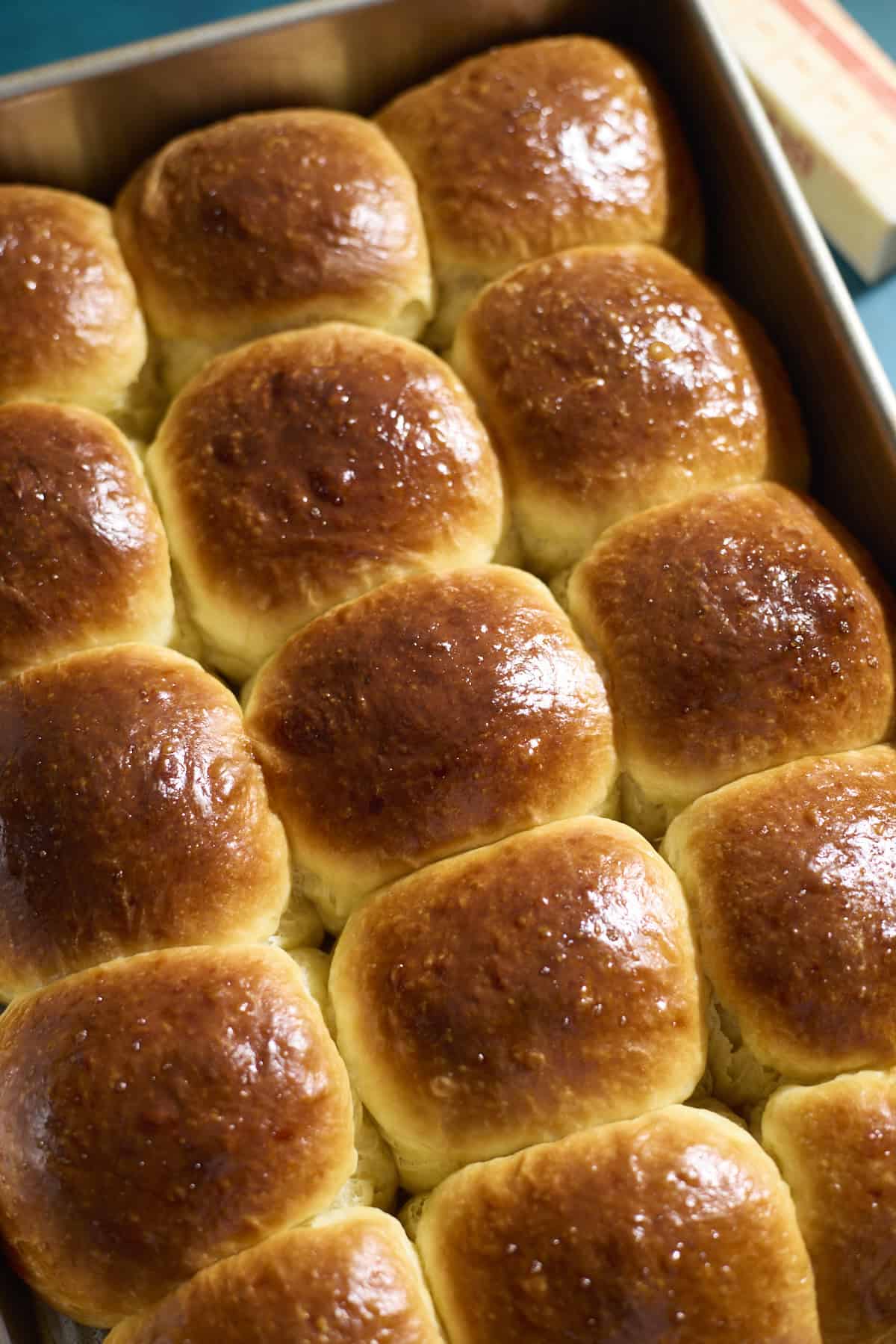
- Step 9: Bake until golden brown. The internal temperature of the rolls should reach 190℉. Let the rolls cool slightly, then serve.
Expert Baking Tips
- Use metric measurements for at least the flour and sourdough discard. These are two ingredients where there can be a huge variation in using cups vs. metric measurements. Using a kitchen scale for metric measurements for at least these two ingredients will set you on the right path!
- Make sure your ingredients are at room temperature (except for the warm milk). The eggs, butter, and sourdough discard should all be room temperature (if they're cold, this will slow down your rise time).
- Let the dough rise in a warm place. Since the fat content in this dough is so high, it hinders the rising proces. It's crucial that your dough is in a warm place to rise appropriately.
- Don't be afraid to pivot! If you let the dough rise for a while and it looks like nothing is happening, adjust and find a warmer spot (like inside your oven with the light on)!
- Looking for other sourdough discard bread recipes? Try this Easy Sourdough Discard Bread and this Sourdough Discard Sandwich Bread.
Common Brioche Challenges
Below are a few common challenges when making brioche, and how to tackle them.
- My dough seems too wet. While the stand mixer is kneading the dough, be patient as the butter incorporates. The dough should be wrapping around the dough hook, hitting or slapping the sides of the bowl, and "pulling" the butter in.
- When the dough has been kneaded long enough, it will pass the windowpane test. You should be able to stretch the dough such that light passes through it without the dough tearing. You'll also be able to pull the dough out of the bowl in one piece (rather than having to scoop it out with it sticking to the bowl).
- If in doubt, keep kneading longer! The gluten structure will develop and help this dough hold together!
- My dough is not rising. The rise time will vary greatly depending on the room temperature. Your dough may rise in under 2 hours, or it may take up to 4 hours. Dough should not be left to rise at room temperature for more than 4 hours.
- After about an hour, you should be seeing some rise in your dough. If you are not, now is the time to pivot! Find a warmer place for your dough to rise. This might be:
- A warmer spot in your kitchen or house, perhaps near a window.
- In the oven with the light turned on (oven is not on / heating).
- On top of the stove while the oven is on / you're doing other stovetop cooking.
- After about an hour, you should be seeing some rise in your dough. If you are not, now is the time to pivot! Find a warmer place for your dough to rise. This might be:
How to Make Overnight Brioche Rolls
To make overnight brioche rolls, follow the directions below through step 6. Once you have made your dough, let it rise for about an hour at room temperature (you want to see some rising activity here). Then, place the dough in the refrigerator to rise overnight (8-12 hours).
The next day, let the dough come to room temperature (this will take about an hour), and continue with the recipe at steps 7 and 8 (shaping the rolls).
Storage
Room Temperature Storage: If you plan to eat these rolls within 1-2 days, store them in paper bag or bread box at room temperature. You can reheat them in the microwave for 30 seconds to make them warm and soft again.
Freezer Storage: Once the rolls have cooled fully, transfer them to an airtight container or freezer-safe bag and freeze for up to 3 months. You can freeze individual rolls, or the full tray of rolls.
- To reheat individual rolls: Reheat individual rolls in the microwave for 30-60 seconds (no need to let them thaw).
- To reheat the whole tray of rolls: Let the rolls thaw at room temperature. Brush the rolls with melted butter (optional), then reheat in the oven at 350 degrees F for 10 minutes.

Recipe FAQs
They're accurate! I use the metric measurements for my own baking, especially with the flour and sourdough discard, so I recommend you do the same! There can be such a huge variation in cups measurements, particularly for those two ingredients.
Yes. This is not a recipe that you can well without a stand mixer.
Try moving your dough to a warmer place. This might be in the oven with the light turned on, or on top of the stovetop while the oven is heated (or you're doing other cooking). The temperature is going to make a huge difference in rise time.
No, for this recipe, it will not work. Active dry yeast needs to be bloomed on warm liquid before it's added to the recipe. In this case, there is not enough added liquid to do so. You'll need to use instant yeast to make these brioche rolls.
More Sourdough Discard Roll Recipes



If you tried these Sourdough Discard Brioche Rolls or any other recipe on my website, please leave a ⭐ star rating and let me know how it went in the comments below. I'd love to hear from you! Happy Baking!

Sourdough Discard Brioche Rolls
Ingredients
- 2 Tablespoons milk warmed
- 1 ¼ teaspoons instant yeast
- 2 ¾ cups bread flour
- ¼ cup granulated sugar
- 1 ½ teaspoons kosher salt
- 200 grams (about ¾ cup) sourdough discard unfed, at room temperature
- 3 eggs room temperature
- ¾ cup unsalted butter softened
- 1 egg + 1 Tablespoon water for egg wash
Instructions
- In the bowl of a stand mixer* fitted with a dough hook, combine all ingredients except the butter (milk through eggs). Mix on medium speed until combined. Increase speed to medium-high and mix for 2-3 minutes until a rough dough forms. It may look dry, but resist adding additional liquid at this point.
- With the mixer running on medium speed, gradually add the softened butter 1 Tablespoon at a time, beating until combined before adding the next Tablespoon of butter. After the first 2-3 adds of butter, the dough will become smoother and wrap itself around the dough hook, slapping the sides of the bowl and pulling the butter into itself. It will take approximately 12-15 minutes to add all of the butter, mixing between each add.
- Continue to beat on medium-high speed for about 5-7 minutes, until the dough passes the windowpane test:The dough should be shiny and feel smooth and silky. When you stretch a small piece of dough, it should stretch to the point that light can pass through it without the dough ripping.
- Transfer the dough to a clean work surface. Gather the dough from an outside edge, pull up, and fold over into the center. Make your way around the dough in a circle, repeating these stretch and folds, until the dough feels sturdier (about 4-5 folds).
- Turn the dough over so the seam side is down on the countertop. Cup your hands around the dough, and gently pull the loaf towards yourself, letting the dough seam drag on the countertop to create surface tension. Rotate the dough and repeat, slowly tightening the surface of the dough. Repeat until you can easily pick up the dough ball (about 5-6 pulls).
- Return the dough to the bowl, cover with plastic wrap, and let rise in a warm place until doubled in size, about 2-4 hours (see notes).
- Brush a 9x13-inch baking pan with 1 Tablespoon melted butter. Set aside.
- Transfer the dough to a clean work surface and divide into 15 equal-sized pieces (I recommend using a kitchen scale to measure your whole dough, then divide that number by 15). For me, each roll was about 67g each. Using one hand for friction, roll each piece of dough into a ball in your palm, creating surface tension with one hand and the seam against your other palm. Set the rolls into your prepared pan, seam-side down. Cover with plastic wrap and let rise for 60-90 minutes until puffed and doubled in size (see notes re: rise time).
- Preheat the oven to 375℉.
- Whisk together one egg with 1 Tablespoon of water and lightly brush the egg wash on the rolls. Bake for 23-25 minutes until shiny and golden brown. The internal temperature of the rolls should reach 190℉.
- Let the rolls cool for a few minutes in the pan, then serve or transfer to a cooling rack to cool fully.
Video
Notes
- A warmer location in your kitchen / house.
- In the oven with the light on (oven is not on / heating).
- On top of the stove while the oven is on / warming, or you're doing other stovetop cooking.
Jessica Vogl says
The SMELL while these are baking is just incredible! So buttery, light, and fluffy. They're perfect paired with sweet or savory fixings!